Handed
On 28 April 2026, a scheduled task wrote the first daily note of a system built to record my working life, and stamped it with the line that names its premise: Kaosi was not present for live questions. I was working client hours between classes, but wanted to be writing fiction. The vault existed to manage everything.
It began as a half-joke: a recommender for my own thoughts, or at least for whatever I wrote down. Most of keeping your word is not forgetting it. But if my sensibilities could be encoded in a system, was using it still my thinking, or was I offloading it? It's an unnerving question, and it sits inside knowledge management. It's also the fear most people bring to working with LLMs.
A week in, an audit against a knowledge manager's handbook returned a precise diagnosis: the vault recorded well and synthesised nothing. It was a diary with good filing. The question it posed was structural ~ whether a personal archive could be made to think back.
Decided
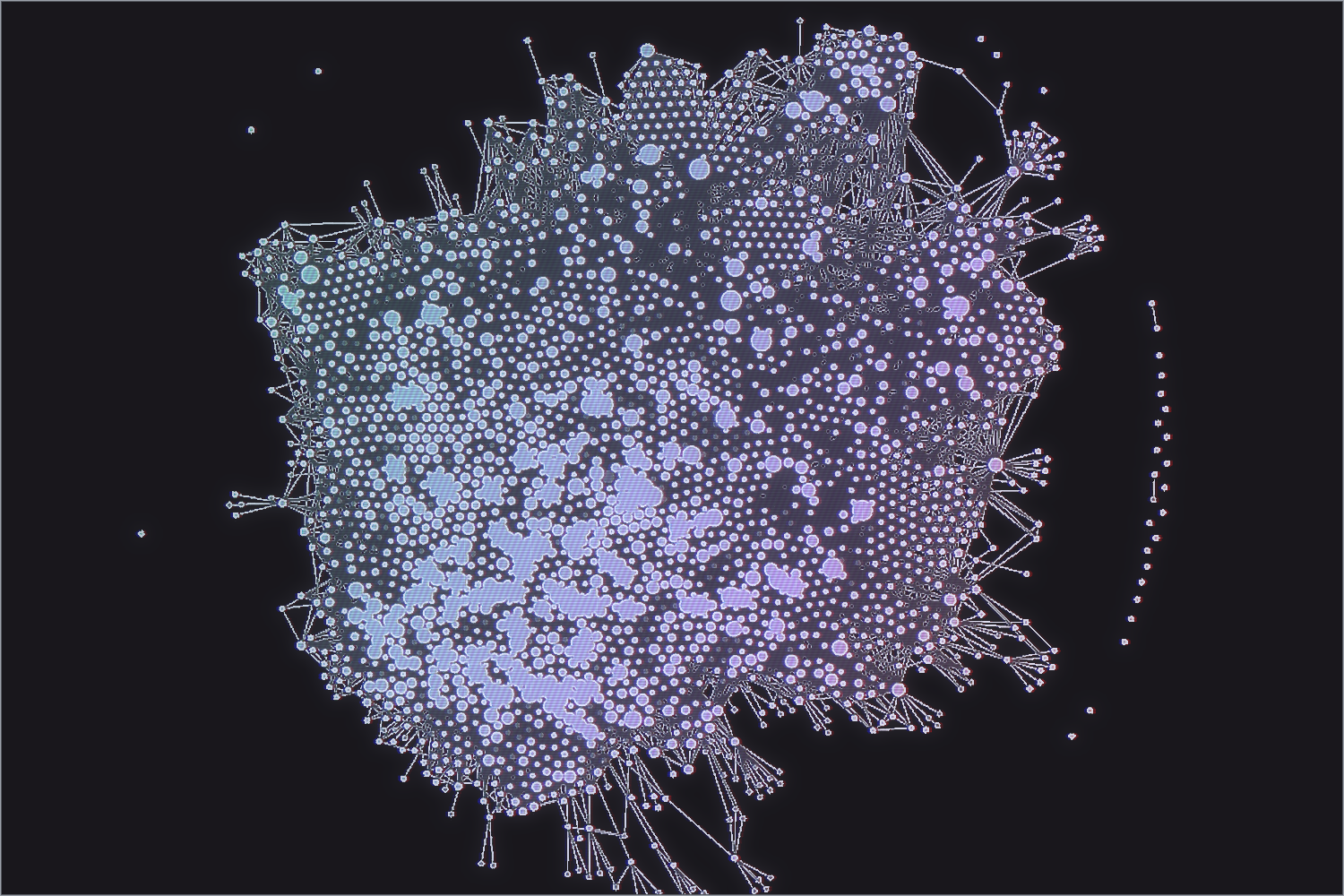
KaosOS is an Obsidian vault, a folder of plain-text notes on my laptop, that Claude agents read and write under rules I set, with scheduled tasks that open and close each day. The system rests on a division of labour. Claude agents draft much of what lives within; nothing changes how the system works without a ruling from me. Four rulings built it.
Integrity before features. In June, files began returning shorter than they were written. The obvious suspect, a script that edited notes across the vault, made only small anchored edits; the fault lay in the sync layer between disk and sandbox, which served partial reads and accepted partial writes. Rather than patch the suspect, I bound every write to four rules: refuse anything under 80% of the file's prior length, edit by anchor, re-read after writing, and scan daily. No file has truncated since.
Audit the auditors. In September I turned the system's instruments on themselves. The morning check that reports overnight failures proved right once in four, and every false alarm traced to one cause: it inferred a task's state from a proxy instead of reading the log the task had already written. The rule became log-first ~ alarm only where log and filesystem disagree, cite the source on every alarm, and verify a repeat before escalating it. The most useful thing an agent did that month was argue against its own proposal, a loosening that would have silenced a true alarm. And after two duplicate tasks sat unnoticed for eight days, a fifth check now reads the task list itself.
Promotion by judgment. An idea once waited out a seven-day timer before it could feed a larger argument. I replaced the timer with a manual promotion gate: a flag set by hand, at a fortnightly session with myself, declaring the idea ready. Wisdom is declared by an author, not elapsed by a clock.
Four kinds of note. The first design offered a single synthesis layer. I split it four ways: an insight is noticed once, a concept recurs, a skill is a move made on purpose, and a framework is the argument that binds them. Each has its own file type and rhythm ~ nightly, weekly, monthly ~ so a passing hunch and a working method never share a drawer.
Shipped
As of 10 October: some 2,300 notes, including 165 daily notes since 28 April, 322 insights, 60 concepts, 31 skills and 64 frameworks, six of them generated by the system itself. Thirteen commands and seventeen scheduled tasks run it, and since September every new guard ships with a test fixture.
The system does work for others, too. The decision trail from which four parties build Sworn lives here, as does the script that counted the 111 decisions on the Telling the Bees page, and a 359-line seed for friends starting systems of their own.
Cut: a link scanner, retired in June.

Outcome
The measure that matters is use. The two ideas promoted to full concepts were applied to real work nineteen times between them ~ nine and a half each, against a target of two.
September tested the other half of the design. Classes began, a client delivery peaked, and the automation caught every lapse in the cadence: weekly synthesis ran one week in four, and decisions waiting for their trails rose to eighteen. The monthly report named the lesson plainly ~ the system had grown better at knowing than at acting.
A company buying AI enablement fears the same thing at a different scale, when it lets people go on the bet that what the team knew can be kept without them. My research asks what walks out the door anyway. KaosOS is that question with one participant: it remembers what I recorded and what I ruled, and the judgment is still mine to declare.
Would change
Pair every alarm with an owner from the start. Detection was cheap to automate, so it arrived first. Next time, each alarm ships with the action it implies and the person or task responsible, and the monthly report counts gaps closed beside gaps found. An alarm without an owner is a note to self with good timing.
Evidence
Reference. Every figure above traces to a file in the vault; none of these are public, and each travels on request with client and personal material removed.
- The first note ~
daily-notes/2026-04-28, written by the scheduled morning task, with the not-present line quoted in Handed. - The baseline ~
audit/baseline/vault-health-report, 5 May 2026: seven days of use, 76 markdown files, "The vault records well. It does not synthesize, propagate, or self-maintain." Stranded decisions and one-way daily notes are its findings. - Four kinds of note ~
audit/phase-2h-insight-concept-skill-framework: the single-layer draft and the reframe that split it. - Write discipline ~
CLAUDE.md§2 for the four rules;projects/vault-engineeringfor the 24 June diagnosis clearing the script, the scanner switched off, the daily scan's first run on 15 September, and the dating result: every truncation it found falls between 5 and 23 June, before the rules existed. - The timer ~
audit/phase-2N-synthesis-readiness, which retires the cooling-off gate for the hand-set flag. September's zero graduations are in the monthly metrics below. - The alarms ~
audit/phase-2X-guard-auditandaudit/phase-2X-implementation-convergence: precision of one true positive in four, log-first reading, sourced alarms, verify before escalating, and the loosening the agent proposed and then argued against. The duplicates and the fifth check are dated inaudit/task-artifact-registry. - Counts ~ a live count of the vault on 10 October 2026, and the live scheduled-task listing read the same morning.
- The outward work ~ the Sworn decision trail, and
projects/portfolio-site/instruments/decision-census.py, which counts the jam's decisions from its team-hub log and private trail and states the freeze-versus-lapse blind spot in its own header. - September ~
audit/metrics-2026-09, run 1 October: nineteen applied uses over two promoted concepts, weekly synthesis one in four, pending decision lifts zero to eighteen, and "the system got better at knowing and no better at acting." - The seed ~ the 359-line bootstrap recorded in
projects/pkg-project.
Edges
- Sworn ~ the same habit pointed at a product team: write the decision down with its reason, so people who were not in the room can build from it.
- Telling the Bees ~ the same lesson at jam scale. A log that only records events cannot tell a freeze from a lapse there, or a missing worker from a quiet one here ~ and the script that found the first lives here.
- Provenance. Drafted by Claude, which is Production Support on this site and also one of the agents the entry describes, from the vault's own audit files. Ruled on by me, which is the arrangement in miniature.