Handed
The jam ran six weeks, and I signed up with a slot and nothing to put in it: no team, no engine, no game. Remote, across a scatter of time zones, with a mentor the jam assigned and three peer reviews on the calendar. The brief was climate; the theme was Plant a Seed. It also ran for credit, as a three-credit UNT internship, with IndieCade's Chief Operating Officer as my supervisor of record.
My only other jam had been six people across time zones for seventy-two hours, so I knew a team like that lasts a weekend. Six weeks was the open question, and so was building one. Last time I joined a roster. This time I was the roster.
Decided
Six weeks is long enough for a remote team to drift and short enough that the drift ships. I set out to keep every answer findable inside the hour: one object for the player, one owner for each lane, one record for the team.
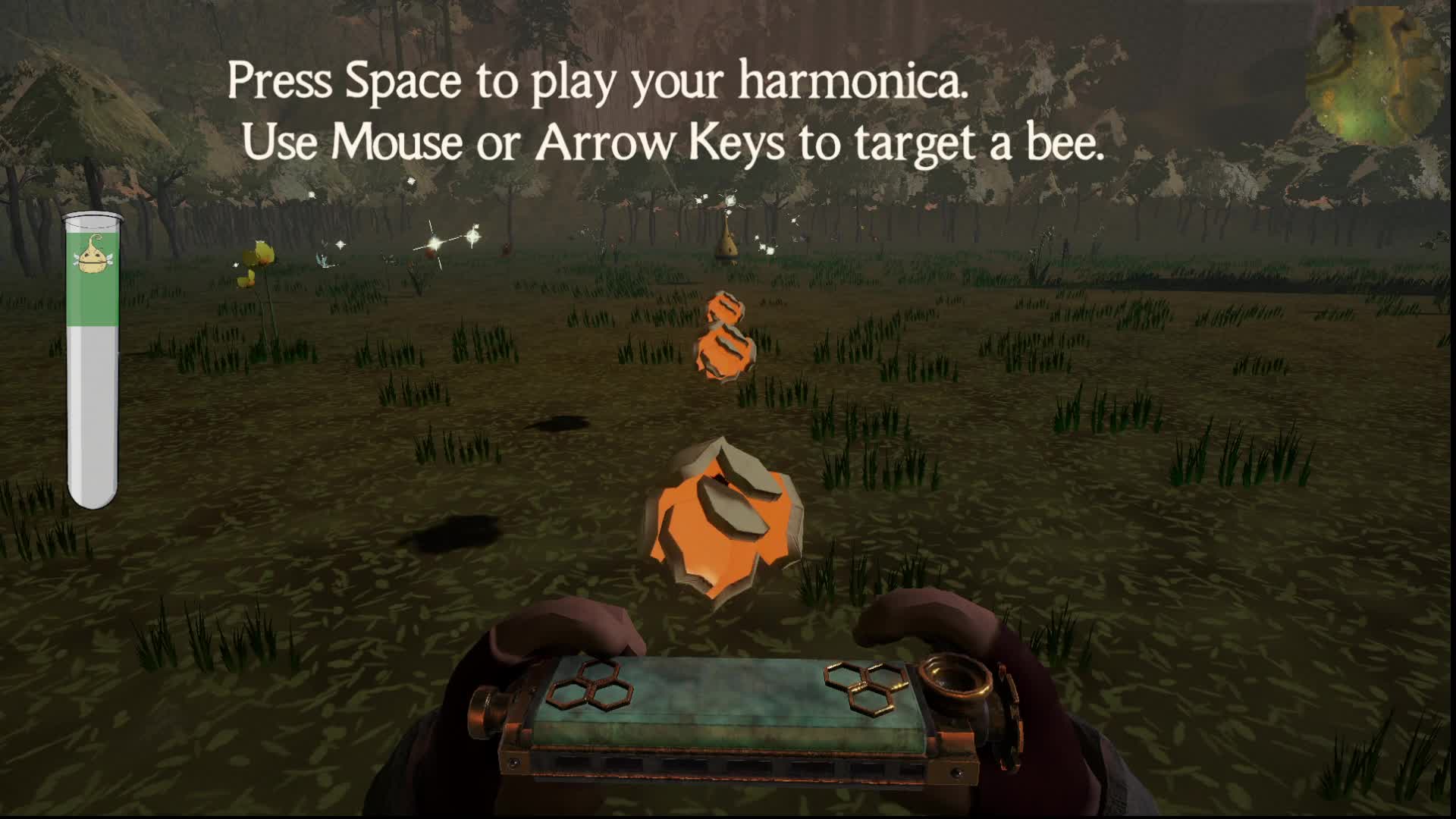
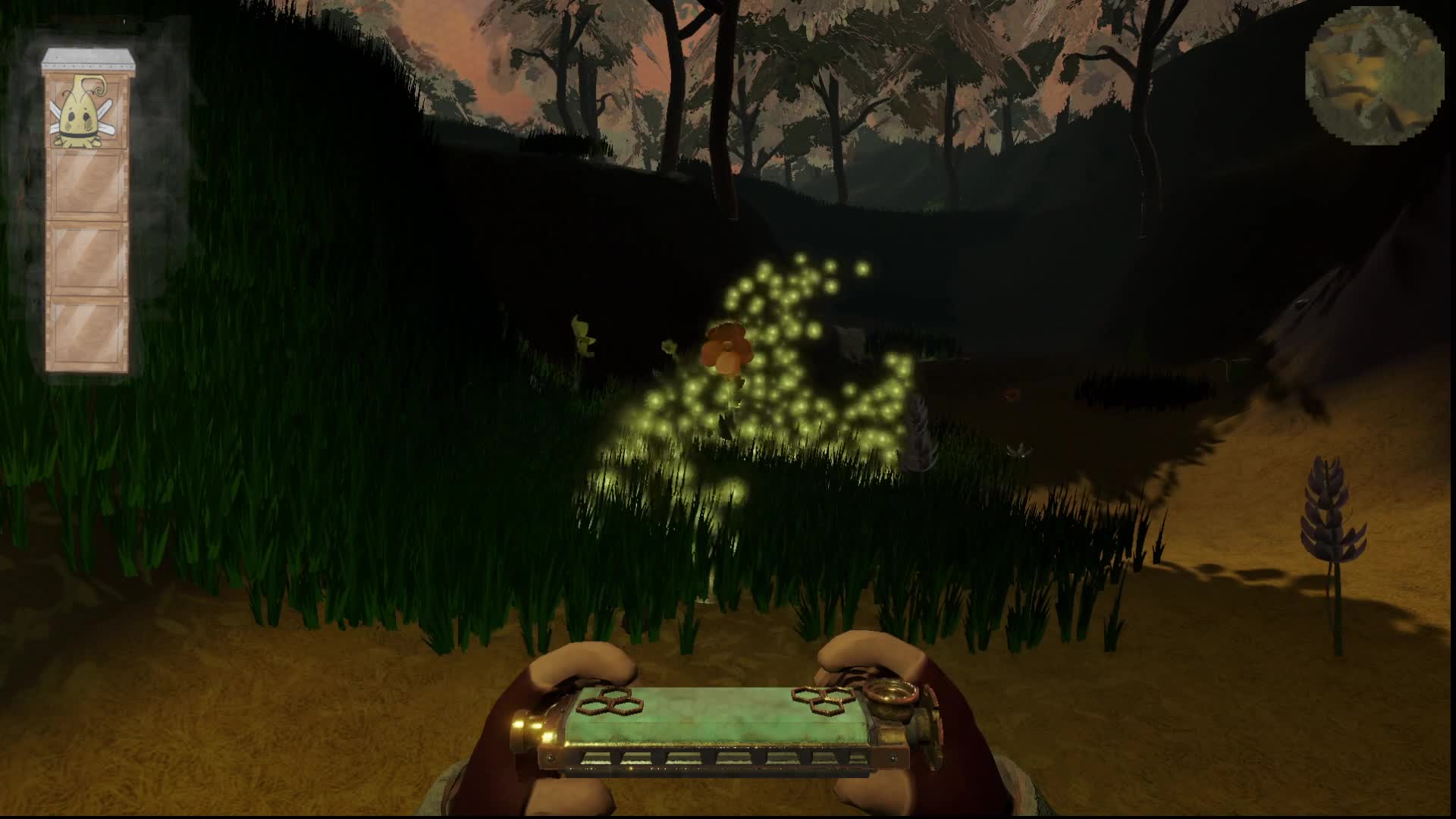
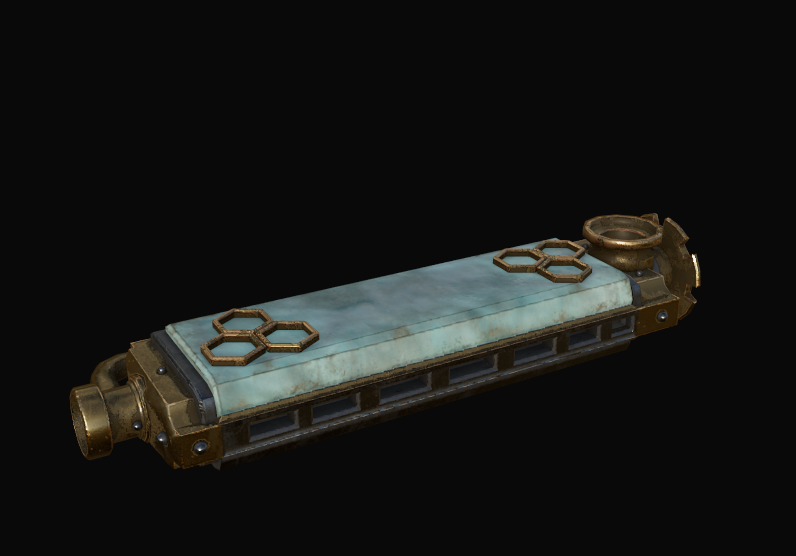
One instrument, two verbs, one input. You play as Nao, a keeper grown old inside a dying order, walking out to her dead mentor's cottage with a nectaronica, which is a souped-up harmonica. Blow it and you pollinate dying flowers on your path; play it and a wild bee meets you in a rhythm bout. We built the game on that one object, so the thing you wander with is the thing you win with. A walking sim and a rhythm game are two grammars of control, and teaching a player both is how a six-week game ships as two halves; one instrument coheres the walk AND the encounter, one skill at different pressures, and the fiction never has to explain a mode switch. So I kept out a gathered resource to spend, which was scope creep, and optional combo scoring, and I cut every later feature that could not earn a place against one object. Nao was my fourth protagonist; I dropped the early favourite, an ageless wanderer who could show a consequence but had no practice to perform.
The tradition, left unexplained. When someone in a household dies, you tell the bees, or the bees leave. The custom is real ~ Celtic, Egyptian, Slavic, Greek ~ and in 2022 Buckingham Palace told its hives the Queen had died. So Nao walks out to tell the bees about her mentor, and I never explain why in game. A world that treats its customs as ordinary is a world a player believes; exposition turns a fact of life into a museum label. A player who has never heard of the custom still gets the grief.
Authority, settled before the concept. On day one, before there was anything to lead, I set up two lane-leads, production and technical, each with the final word in his own domain and a creative say across the whole ~ rather than one lead with a senior hand beside him, or flat consensus, because consensus has no owner and a jam wants its answers inside the hour. The log shows what that bought: 111 cross-lane decisions in 19 days, and 21 of them made without me. I originated four and ratified twenty-nine more. That is the job on a team this size: lock the better idea rather than have it, and price what breaks downstream. It is the decision record, not the authorship record ~ I wrote the world bible, the five-act spine, the build documents and every line of dialogue. Two jobs, one head.
Warmth before analysis. The retro run-sheet policy. Let feelings show, listen to peer feedback, and only then search for improvement areas. Team Groundhog Day agreed to work together again, some day. Six people across time zones only works in a room that feels safe. An unsafe room tells you "it was fine."
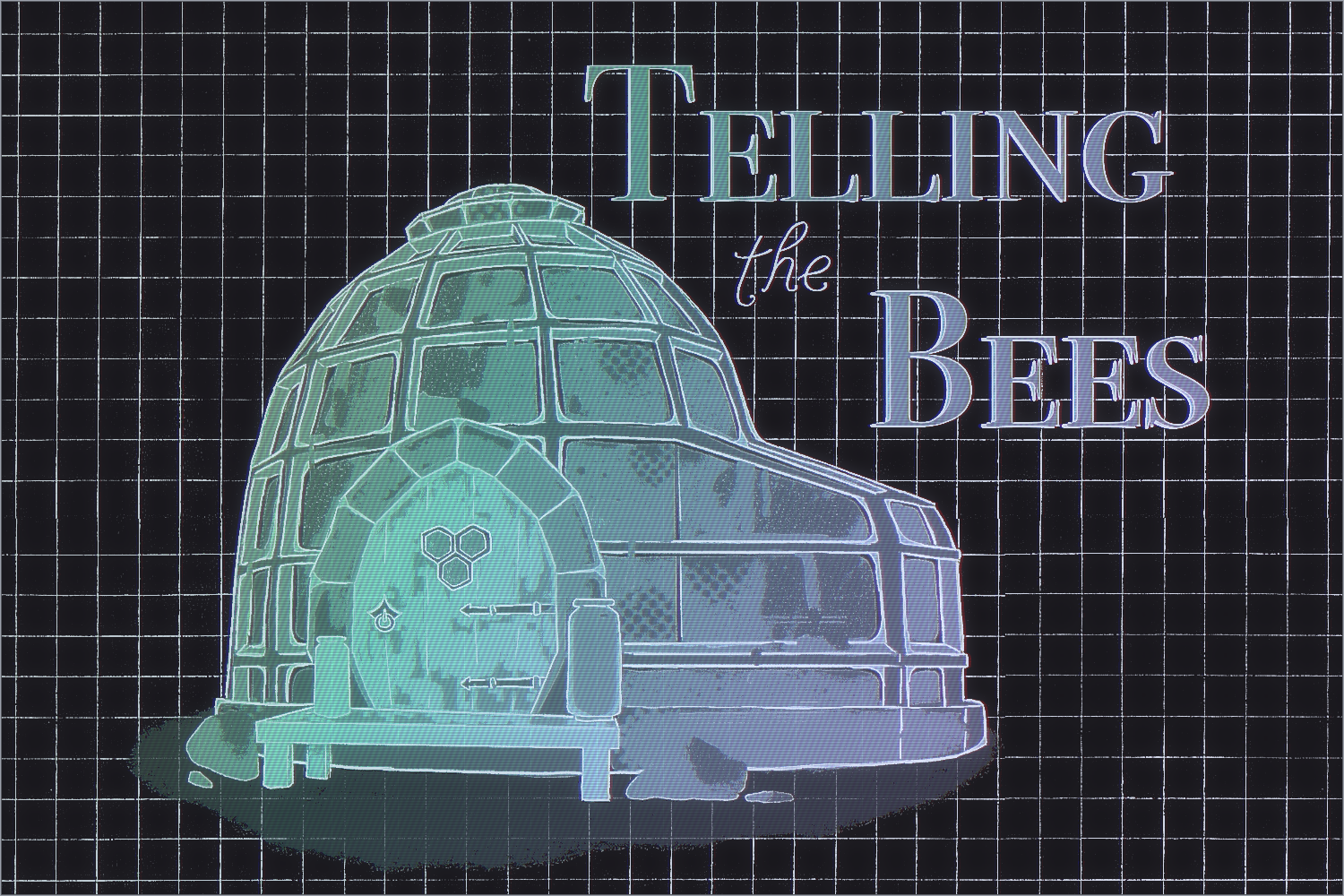
Scope cut twice, both times on someone else's read. On day five my programmer and co-lead reached the same read apart, half an hour between them, in a channel after midnight: a stack of mechanics plus a semi-detailed world was more than five weeks could build. I wanted to defend the design. Two of my own leads converging after midnight is a feasibility signal, not a mood, so I ratified it overnight. We cut the walk from fifteen minutes to three, with one encounter node; mechanics tightened and narrative scope stayed, and that asymmetry was the call. The three-minute walk gave the team one loop to get right ~ the walk, the encounter, and the parts a rhythm game's UI can't do without. The Sprint 3 build played it end to end on 27 July, and after that we were off to the races. Four days on, three peer teams and the mentor, separately, read the project as too large, and confirmed what the team knew externally. The second cut came in production. We dropped the descent into the massive Kessu igloo and the looming background asset that went with it, and used a super-size version of the ordinary igloo the player sees at the end of the game. And a bee's mood stopped shifting with the pollination count.
A bad playtest, read as legibility. A professor playtest found the quiet walk and the rhythm sections disjointed. The input had been unified since day one; the fiction had not, and that is what the playtest found ~ there was no frame for why you played in the world. So the mechanics stayed, and we fixed it on two fronts. We made onboarding name the instrument by what it does, and the bees speak to why they dance. And we made the rounds change the world: keep the line through a round and flowers open down the lane behind you while the sky lifts a shade, so the rhythm game and pollination do the same thing. I had just reframed toward call-and-response when our lead artist arrived with the same idea, researched on their own ~ and two people reaching it apart is about as good as evidence gets on a jam. We did it in the final push, and left the encounter order sequenced to scale in difficulty.
Shipped
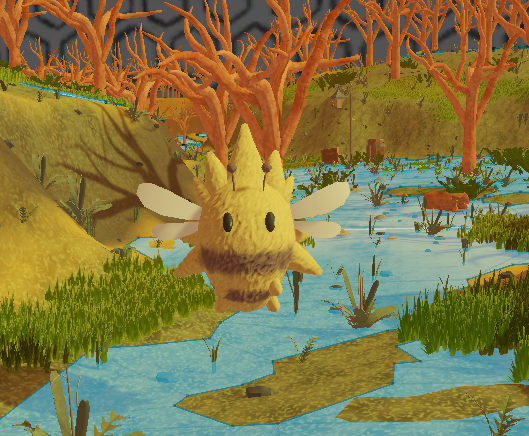
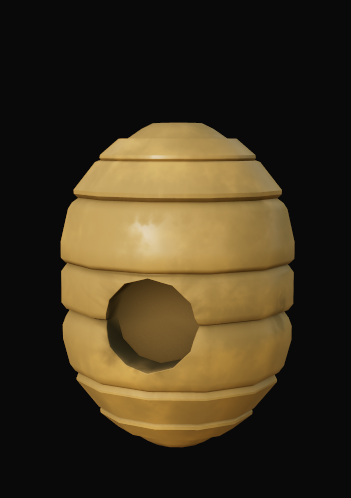
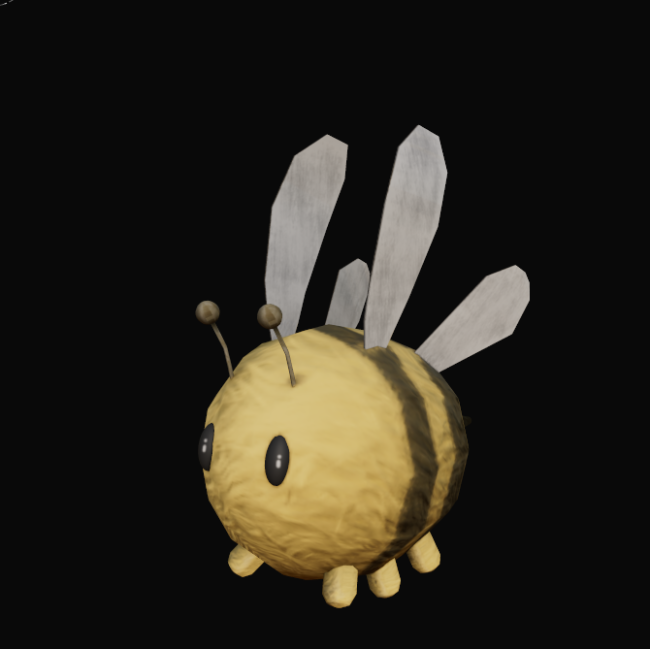
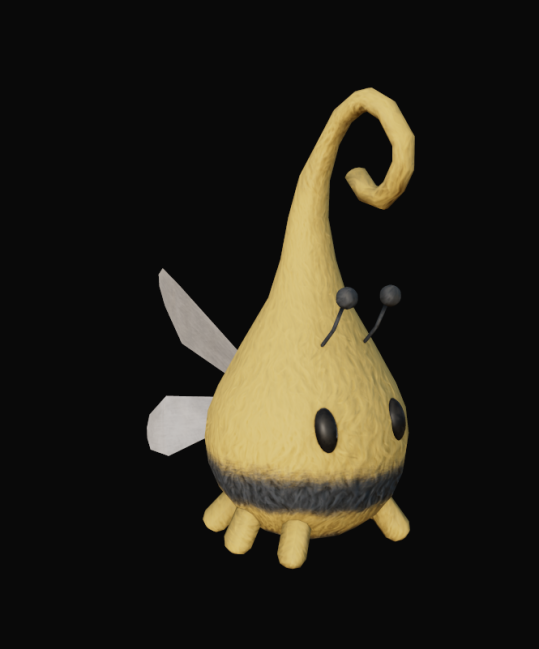
A finished rhythm game, in the browser, on 12 August 2026. A tutorial and three wild hives give you four encounters ~ angry, calm, neutral and heat-confused ~ and each wants something different from the same two verbs. Behind them: a world bible, a five-act spine, six endings, and dialogue for every bee and every page of the walk. Around them: a press kit, submission statements, art direction for the title screen, and a promotional site built from nothing. With everything built after the cut, a full run ~ every page read, every hive tended ~ takes about 25 to 35 minutes of rhythm and roleplaying.
One document outlived the jam: the seventy-five-minute run-sheet the retrospective ran on.
Cut to get there: the round-progress display, pared after the team reported it served nothing; the talk-to-unlock flowers, cut at the wire; the visual lanes, dropped once playtesters did fine without them.
.webp)
Outcome
In the Sprint 2 peer round we placed second in both concept and aesthetics. Then the jam placed us third of fifty for Best Use of Theme, the category that judges how a game reads its theme, ranked by jammers and a panel together. The theme is where the whole design made its argument ~ one instrument, one input, tending as the verb ~ so an outside panel named that argument as the part that worked. We shipped inside a twelve-hour extension, granted when the jam's submission backend fell over at the deadline, with the build we meant to ship.
The playtest signal ran both ways, and the both is the useful part: one report that an encounter "brings a smile but you don't fully know what's going on," against an earlier "more movie than game." We gathered no retention or play metrics, so what the game became for anyone past one session is a thing I cannot tell you.
Would change
Log the freeze, and log the silence. We stopped logging on 17 July, in the middle of Sprint 3, twelve days before Sprint 4 handed down a written freeze, "no new features, only building and cutting," with a definition of done. A log that records only decisions shows a freeze and a lapse the same way, and a cross-lane rule goes quiet once the producer is the only lane left, which is what those last weeks became. So next time I log the freeze as an entry of its own, and each stretch with nothing to decide. I give the opening rebuild a record too, and "the final build" one name: ours moved four times while softlocks surfaced during ranking, and we took the theme award with those defects in the build. After the record, I would treat performance as a design constraint from the first week, not polish in the last.
Evidence
- The game ~ in the browser, playable, linked above.
- The promotional site ~ a scroll-driven WebGL descent through the world, the nectaronica and the playable build, designed and built end to end. It is also where the 3D work this portfolio runs on was proven.
- Available on request, internal by default: the run-sheet, the 47-item deliverable set, and the two-surface decision record ~ a log the team could read, beside a trail that records the reasoning behind each public row. The counts on this page come from those and can be recomputed from them; they stay internal because they quote what my teammates said.
Edges
- The 72-hour origin: Launch Day ~ the jam that made the producer who writes. Second of 123 and an Excellence in Game Writing award at breakneck speed there; third of fifty on the theme across six weeks here. The same instinct at two scales.
- Where the instinct came from: sprint-to-the-rock-ldd, a level design document I wrote for a course the spring before, built on one rule ~ the transformation is a tax on time, paid in the same currency that determines the ending. That game unified a resource with an outcome. This one unified an input with its verbs. The same move, a layer up.